Jack–Jill sibling relationship
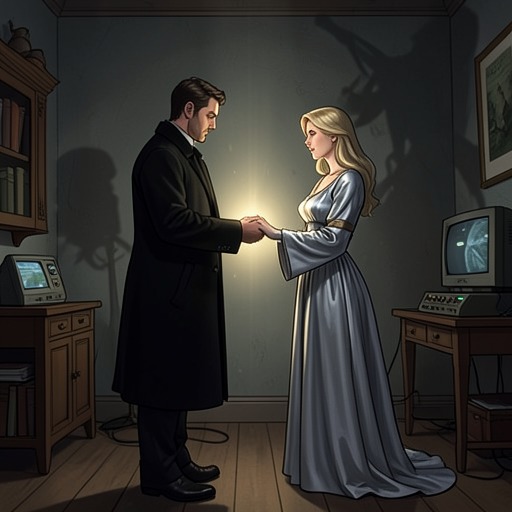
Awakening the Angel System: Apocalypse: A LitRPG Progression FantasyJack–Jill sibling relationship is defined by the distance between who Jill was, what the Khloros made of her, and what Jack refuses to stop recognizing. When Jack reaches the machine’s cockpit, he sees a green-haired child wired into machinery and fleshy tendrils, her convulsing body marked by black veins. Even beneath the mechanical mask and the corruption, he knows her: Jill, his sister. The recognition is not a sentimental pause in the battle but the point at which the conflict becomes an intimate catastrophe. Jack has found the person he had been separated from, only to encounter her as an engineered weapon that can barely remain herself.
Recognition Amid the Khloros
Jill’s altered body makes recognition unstable. The machine speaks through a cacophony of hundreds of voices calling for a brother, repeating and deforming the word until kinship itself sounds like corrupted data. Jack answers with Jill’s name, and the Khloros halts only inches from tearing him apart, visibly straining against an unseen force. That hesitation gives the relationship a physical form: Jill is still present inside the weapon, but her remaining agency is fighting through layers of imposed machinery, flesh, and hostile energy.
Jack’s approach is correspondingly conflicted. He is wounded, bleeding from his shoulder, head, and left eye, yet he reaches toward the mask despite warnings from Sahaqiel and Lilith. Touch does not restore immediate contact. Instead, it produces pain, screaming voices, and a burst of putrid energy from Jill. The Angel System’s corruption warning reduces the scene’s horror to a visible system error, but the reduction only sharpens the tragedy. A sibling’s suffering is being processed as damaged information, while Jack experiences it as a person he cannot abandon.
Jill’s Request and Jack’s Refusal
The decisive exchange begins when Jill manages to say that she can walk. Her words ignite Jack’s hope that his sister remains accessible, and he immediately imagines bringing her home to meet his niece and nephew. His response reaches toward ordinary family continuity: home, children, reunion, and a future in which Jill can occupy a place within the household rather than the machine. Jill answers with “Kill. Me.” The request stops Jack cold because it transforms rescue into a question of mercy and makes her own judgment the final testimony of her condition.
Jack cannot carry out that request himself. Sahaqiel therefore enacts Selfia’s plan, taking control of Jack’s body and apologizing through his mouth before plunging his hand into Jill’s heart. With Lilith’s help, they pierce the veil of corruption and attack the source of the machine. Jill does not resist. Her final words ask whether she had been helpful, and the Khloros releases her as Sahaqiel carries her away from the exploding mech. The action saves Jill from continued torment, but it also creates a wound in the sibling bond: Jack’s body performs the killing while Jack remains emotionally present, unable either to consent freely or to prevent it.
The explosion leaves Jack unconscious and broken. When he wakes amid the debris, he crawls forward with no strength in his arms, kicking at the dirt and calling Jill’s name. Once his arms heal, he drags himself up and gathers her body against him, repeating his plea while his cry rises over the battlefield. His grief is not presented as a clean release. It is a bodily collapse, a delayed recognition of what the battle required, and a form of witnessing that gives Jill’s death a familial meaning the machine could never acknowledge.
Soul, Secrecy, and Forgiveness
Jill’s physical death does not end the relationship. Sahaqiel and Lilith preserve a small flickering orb containing Jill’s soul, a blackened mass with motes of light caught within it. Jack recognizes it without needing an explanation because he has seen a soul before, and the sight produces a disturbing mixture of pain, knowledge, and a maddened smile rather than uncomplicated comfort. Jill survives as a damaged spiritual presence, neither restored nor erased, and the soul becomes the material basis for a later return.
Sahaqiel admits that she preserved Jill and placed her safely in a coma because Jack could not hurt his sister, while the larger plan had gone beyond what was intended. Jack tells her, “I forgive you,” then reveals that he has known the secret for five months. His forgiveness does not deny the violence or dissolve his grief; it acknowledges the impossible choice made around Jill while also exposing the secrecy that shaped it. The relationship thus extends beyond the moment of death into an ethical aftermath in which Jack must live with both the loss and the means by which Jill was spared from the Khloros.
A Sister in the Final Battle
Jill remains linked to the final conflict even while her soul is separated from her body. Before the last battle, Jack sees the soul of a young green-haired girl gestating in a dream where she can walk. The image reverses the earlier Khloros scene: where Jill’s body had been immobilized by wires, tendrils, and corruption, the preserved soul imagines movement and the possibility of a self-directed body. Her presence also means that Jack does not face the end alone. Sahaqiel and Lilith stand beside him, while Jill’s continuing existence gives his struggle an explicitly familial stake.
This restoration is set against the forces responsible for the family’s suffering. Michael identifies the history Jack and Sahaqiel share by recalling that he commanded Jack’s father’s body, experimented on Jill, and ruined many of their loved ones. The accusation names Jill’s transformation as part of a deliberate chain of domination rather than an isolated battlefield accident. Jack’s relationship with Jill therefore becomes one of the reasons he is willing to make alliances under extreme conditions and to oppose the system that converted relatives into instruments.
Return to the Living World
The relationship reaches its fullest visible reversal when Jack returns after five years. He appears with six wings—two silver, two white, and two black—and Celeste runs past Ada to embrace him. Jack introduces the small green-haired figure beside him as his sister. Jill enters through a blue vortex with a white flower obscuring one eye and one golden eye observing the gathered family. She is tentative, apologetic, and physically inexperienced, explaining that walking in the actual world is strange and that legs are strange. The awkwardness matters: her return is not a simple restoration of the old Jill but the beginning of embodied life after mechanization, corruption, death, and preservation.
Celeste immediately calls her “Auntie,” placing Jill within the family’s present rather than leaving her as a memorial to its past. Jill’s identity is consequently rebuilt through recognition and kinship, not through the recovery of the Khloros body. Jack’s promise to introduce her to his family is finally fulfilled, though in a form far removed from the reunion he imagined when Jill first said she could walk. The scene converts the earlier command for death into a later, fragile demonstration of life.
Jack then commands the Angel System to awaken, opening golden interfaces marked “Administrator.” The gesture places Jill’s return within a larger transformation of the world’s governing system, but it also gives the sibling relationship a final symbolic counterpoint. Jill was once trapped inside a machine that treated her body as corrupted material; at the reunion, Jack displays command over the system rather than allowing it to define her. Their bond survives not by pretending that the trauma never happened, but by carrying Jill through a new form in which she can stand, speak, and be named as family.